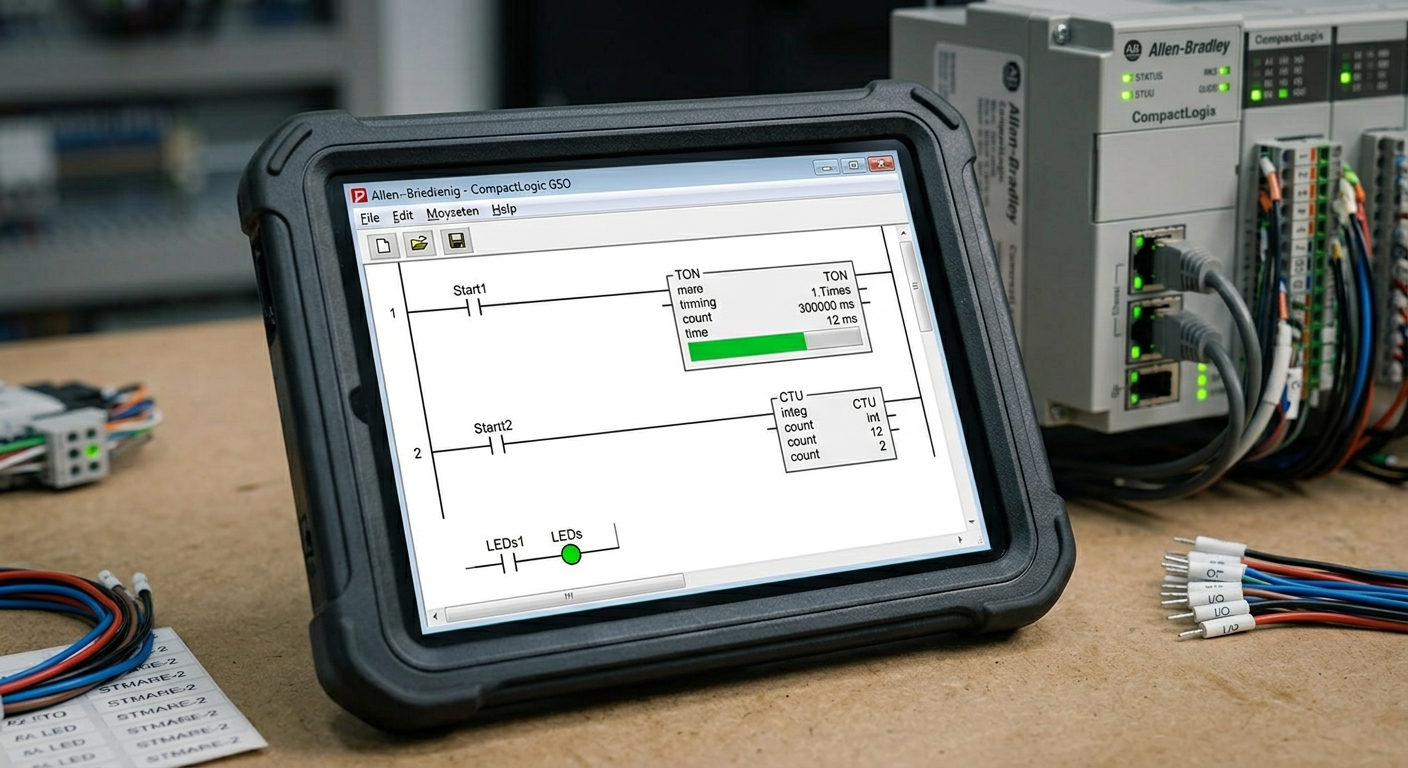
PLC timers and counters let a control program make decisions based on elapsed time or repeated events. They are simple instructions with large effects on machine behavior, so their preset, reset, time base, and state must be clear.
Timers
On-delay timers wait for a condition to remain true before declaring done. Off-delay behavior holds an output or state for a period after a condition goes false. Retentive timers preserve accumulated time until explicitly reset, which can be useful but can also surprise a technician after a restart.
Counters
Counters track events such as completed parts, cycles, rejects, or maintenance intervals. Define what constitutes one event and use edge detection when a signal may remain true for multiple scans. A counter should have a documented reset condition and an appropriate response when its target is reached.
Common mistakes
- Using an output as the only indication that a timer completed.
- Resetting a timer from unrelated logic.
- Counting a maintained input on every scan.
- Ignoring controller restart and retentive behavior.
- Using timing as a substitute for missing feedback.
Practical example
A conveyor command may start a five-second timer while waiting for running feedback. If feedback arrives, the timer resets. If it expires first, the PLC raises a conveyor-start timeout. That is more useful than simply delaying the next step for five seconds.
For broader execution context, read PLC scan cycle explained. TechControl supports maintainable PLC programming and machine commissioning.
Ready to bring your project to life?
Contact Us